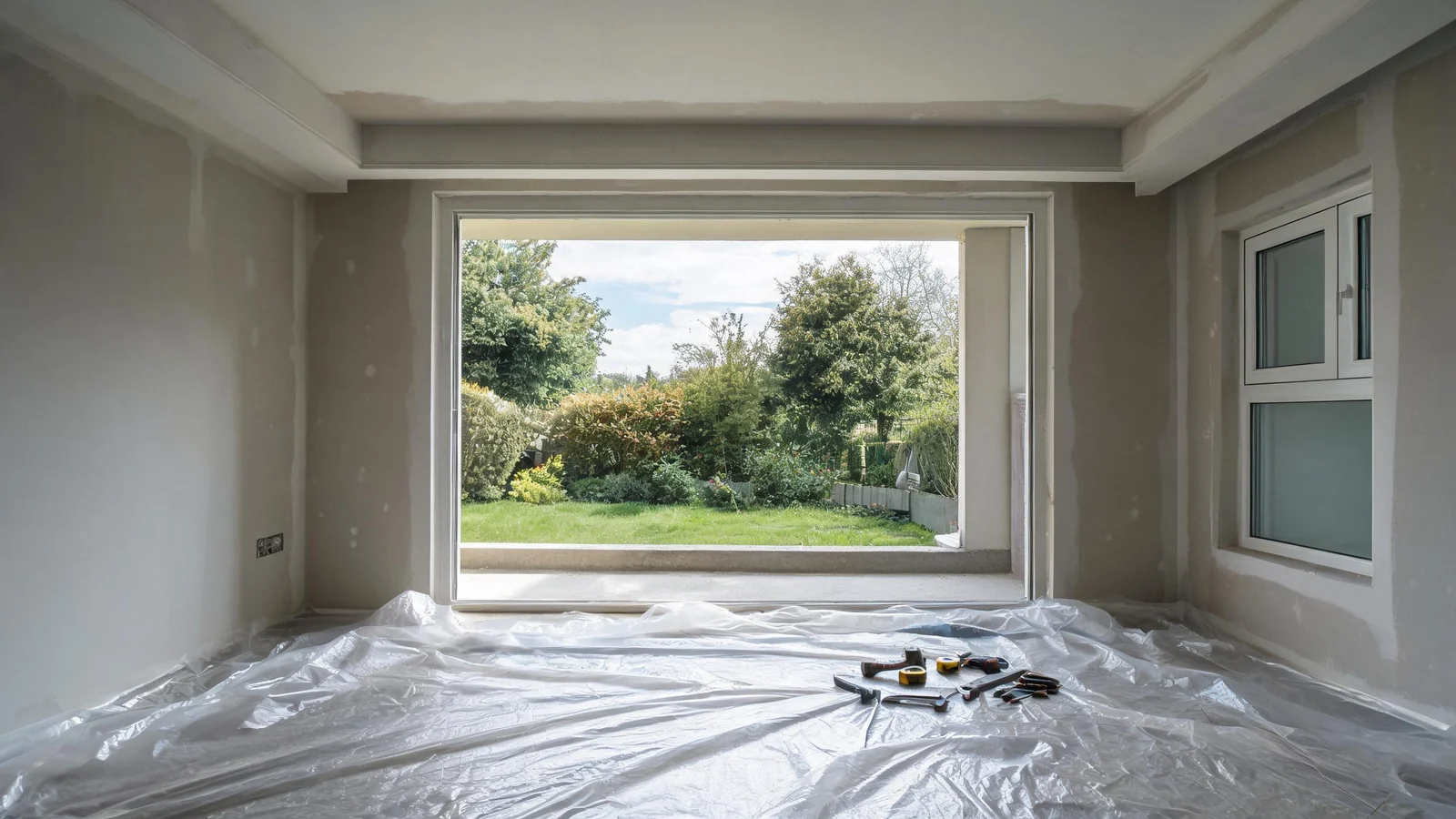
Why Removing a Patio Door Takes Planning
Patio doors are heavy. A sliding glass panel can weigh more than a hundred pounds, and a folding door system has multiple panels connected by hinges and rollers. Before you touch a screwdriver, walk through the job step by step. That means checking the door type, the track condition, and the space around the opening. If the door is being replaced, measure the rough opening before you remove anything, so you can order the right size and not live with a hole in your wall for weeks.
Most patio doors fall into a few groups. Sliding doors have one fixed panel and one moving panel, or two moving panels. Folding doors, sometimes called aluminum bifold doors, stack to one side or both sides. French doors swing on hinges. Each type comes out differently, but the basic steps are the same: remove stops and trim, lift or unscrew panels, then take out the frame if needed.
Tools and Materials to Have Ready
Get all of it out before you start. You need a cordless drill with Phillips and Torx bits, a pry bar, a rubber mallet, a utility knife, shims, and a helper. For a sliding door, keep a block of wood nearby to protect the track when you pry. For a folding door, a set of hex keys gets the hinges and rollers adjusted. A drop cloth keeps the floor clean. Masking tape holds screws with their matching hardware.
Don't work alone. A single sliding panel is awkward to lift and it twists if you grab it by the glass. With two people, the job is safer and goes faster.
Removing a Sliding Patio Door
Sliding patio doors run on top and bottom tracks. Pull the screen door first if one is there. Lift and swing the bottom rollers out. Then the moving panel. It usually comes out before the fixed one.
Check the top of the fixed panel for a stop, plastic or metal. Unscrew it and set it aside. Some doors have a center jamb or astragal locking the panels together. Take that off too.
To pull the sliding panel, open it halfway. Grip both sides and lift straight up until the bottom rollers clear the track. Tilt the bottom toward you and set the panel on something padded. Does not lift? Look for adjustment screws at the bottom corners. Turn them counterclockwise to raise the rollers.
The fixed panel usually has screws through the top and bottom tracks. Remove those, then lift the panel the same way. Some have a glazing bead or stop that must come off first. Work slowly and keep the panel vertical so the glass does not bind.
Taking Out Bi Fold Doors
Folding patio doors are just hinges and rollers, but the job goes faster if you know what holds them. Start with the door fully closed. Find the pivot at the top of the first panel. It is usually a spring-loaded pin you push down or a screw you loosen. Release it and swing the panel off the track.
Work panel by panel. Each one has a top pivot and a bottom roller. Lift slightly to free the roller from the guide, then angle the panel out. Keep them in order, and label with tape if you might reinstall. Stack removed panels flat with cardboard between them so the finish does not get scratched in the truck.
Some folding doors sit on a bottom track screwed to the floor. Others ride in a recessed guide. Pull the screws after the panels are out. If the track is embedded in the floor, leave it alone. The new door might use the same one, or a threshold will cover it.
Getting the Frame Out and Checking the Opening
Panels are done, so now you decide about the frame. Leave it if the new door is the same frame size and the frame is square and solid. If it is damaged or the profile differs, pull it.
Cut the caulk or sealant around the outside with a utility knife. Take out the screws holding the frame to the studs; they hide behind weatherstripping or under plastic caps. Ease the frame away with a pry bar, working bottom up. Use shims to protect the wall.
Check the rough opening for level and plumb. A floor out of level means the new door needs shims. Sides not plumb mean the panels will bind. While you are there, look for rot or water damage around the opening. Repair any soft wood before the new door goes in.
Patio Door Measurements Before You Order
If you are replacing the door, get the measurements right. That matters more than anything else. Measure the rough opening width at the top, middle, and bottom, and use the smallest number you get. Do the same for height at the left, center, and right. Write down the measurements and take photos of the opening from inside and outside.
For a sliding door, the new unit should be about half an inch narrower and half an inch shorter than the rough opening, which leaves room for shims and sealant. A folding door is different. The manufacturer will specify the exact rough opening size. Do not guess. Send the measurements to the supplier and ask for a drawing before you pay.
WANJIA Hiseng provides measurement guidance for its aluminum folding door series and other patio door types. The technical team can review your dimensions and confirm the right panel count and configuration. This step prevents costly mistakes on custom orders.
Mistakes That Cost You
Removing the door before the replacement shows up is a mistake. If the new door is delayed, you have an open wall. Order first, then remove the old door when the new one is on site.
Prying against the glass is another one. Always pry against the frame or use a block of wood. Glass can crack suddenly and cause serious injury.
Do not force a panel that will not lift. Check for hidden screws, adjustment bolts, or a locking mechanism. Forcing the panel can bend the track or break the rollers.
And do not skip the level check. A new door installed in an out-of-square opening will never operate smoothly. Take the time to shim and seal correctly.
When to Call a Professional
Patio door removal works fine as a DIY job for most homeowners. But call a pro if the door is oversized, the frame is rotten, or the opening is structural. A contractor can assess the situation and handle the removal safely.
For builders and dealers, this is routine work. Follow the manufacturer's instructions for the specific door system. WANJIA Hiseng provides installation videos and written guidance after the goods arrive. Remote assistance is available until the project is finished. That support helps the new door operate correctly from day one.
Replacement Options from WANJIA Hiseng
Once the old door is out, you get to choose what goes back in. Aluminum bifold doors open the whole wall and stack off to one side. The 68, 75, 80, and 88 series differ in profile depth and glass. The 88 series is ENERGY STAR certified, and its bottom sliding system holds up to 400 KG.
For a sliding setup, the 170 series aluminum lifting and sliding door is ENERGY STAR certified too. The frame runs 2.2 mm and triple glass cuts noise by more than 30 dB. A traditional look comes from French doors in the K80 series. Big entrance, multi-chamber thermal break, optional triple glazing.
Some jobs need wood inside. Aluminum clad wood doors pair a 6063-T5 aluminum exterior with an American oak interior. Hardware options are ROTO, SIEGENIA, and CMECH. Good fit for high-end homes where look and performance both count.
All WANJIA Hiseng patio doors are made to your measurements. Lead time is usually 25-30 business days. That depends on the design and how many orders are in the queue. Quotes come back within 3 hours on average once we have your project details.
Final Checklist
Go through these before you start.
- Measure the rough opening and order the replacement door.
- Gather tools and a helper.
- Remove screens, stops, and trim.
- Lift out sliding panels or release folding door pivots.
- Remove the frame if necessary.
- Check the opening for level, plumb, and damage.
- Prepare the opening for the new door.
Take your time. A careful removal makes installation easier and protects the wall and floor. Questions about door removal or replacement? Contact WANJIA Hiseng for technical support.